Top USD-pegged stablecoins with deviation in bps + regime classifier.
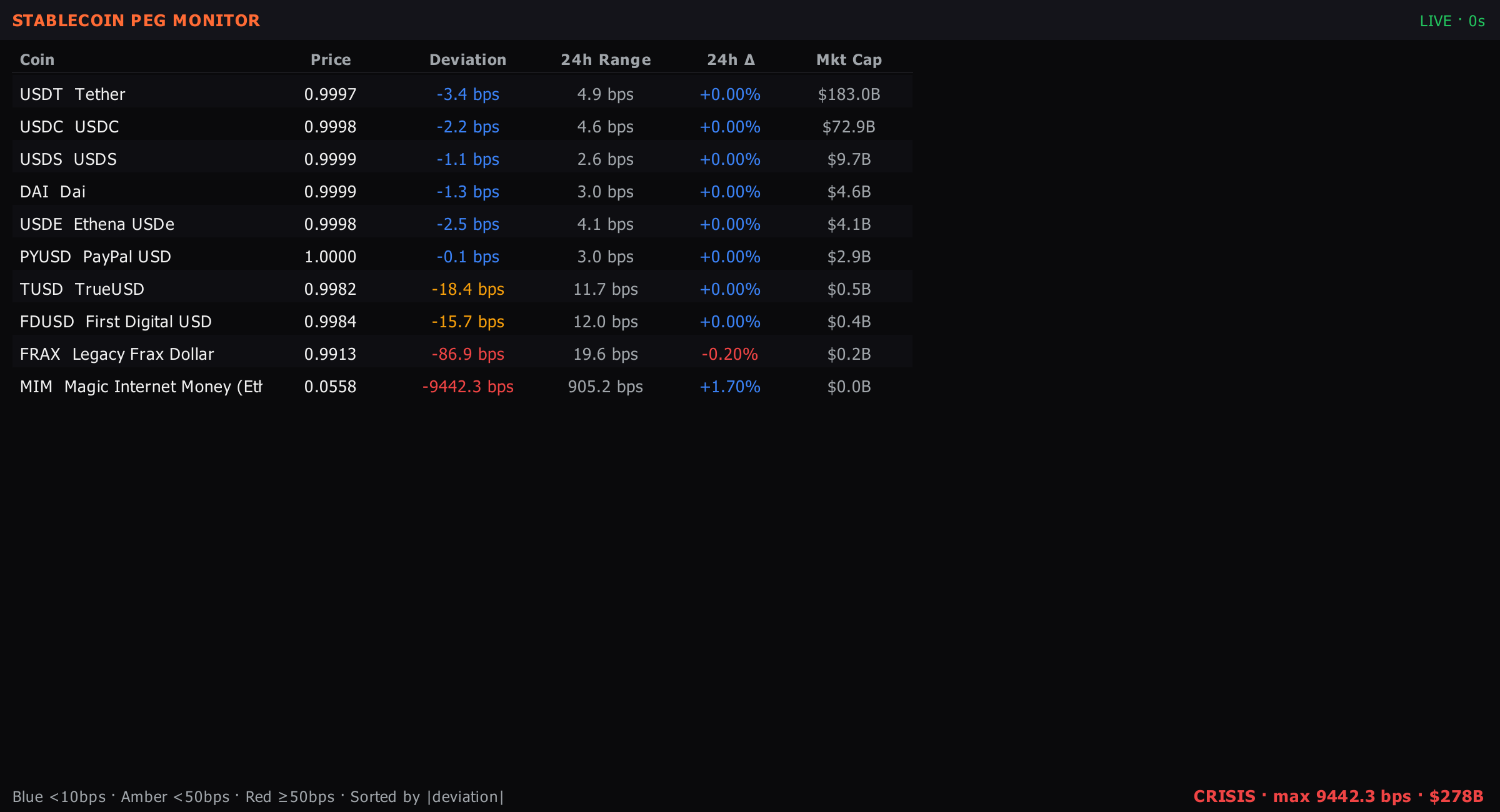
“The stablecoin peg panel tracks major dollar stablecoins and how far each sits from a dollar, an early sign of funding stress.”
Per-coin tracker for the dominant USD stablecoins — USDT, USDC, DAI, FDUSD, FRAX, USDe, PYUSD, USDS, MIM, TUSD. For each: current price, deviation from $1.00 in basis points, 24-hour trading range (also in bps), and market cap.
A clean peg sits at $1.0000 ± 5 bps. A drifting peg (15 bps+) is the early warning. A de-peg (50 bps+) means something is broken. Crisis territory (200 bps+) is rare and consequential — usually predicts forced liquidation cascades on lending platforms within hours.
USD-pegged stablecoins with peg deviation in basis points.
Open itAdd Panel ▸ Macro ▸ Crypto & Energy ▸ Stablecoin Peg Monitor
USDC / USDT / DAI / FDUSD / etc. Each shows current price + bps deviation from $1.00. Stress regime: deviation > 50bp = active de-pegging; > 100bp historically = liquidity crisis or counterparty event.
Stablecoin issuers hold short-duration paper as reserves (T-bills, repo). When that paper re-prices fast, redemption pressure forces de-pegs. The first thing that breaks in a liquidity event — earlier than equity, often earlier than credit spreads.
Issuer + reserve composition (cash / T-bills / commercial paper / corp bonds). Less paper-heavy reserves = lower de-peg vulnerability. USDC's Mar-2023 SVB de-peg was a transmission of SVB's collapse via reserve banking.
Type FR. Funding rates spiking + stablecoin de-pegging + perpetual basis collapsing = full crypto-deleveraging cascade in progress. The three-signal confirmation that historical liquidations ran on.
Ctrl+P, then # and the panel name.Add Panel › Macro › Crypto & Energy › Stablecoin Peg Monitor. The command palette (Ctrl+P) finds it by name too.Hero chip color-coded by the worst-offending coin's absolute deviation:
Prices refresh every 60 seconds from licensed market data.
