NY Fed reference rates (SOFR/EFFR/OBFR/BGCR/TGCR) + key stress spreads.
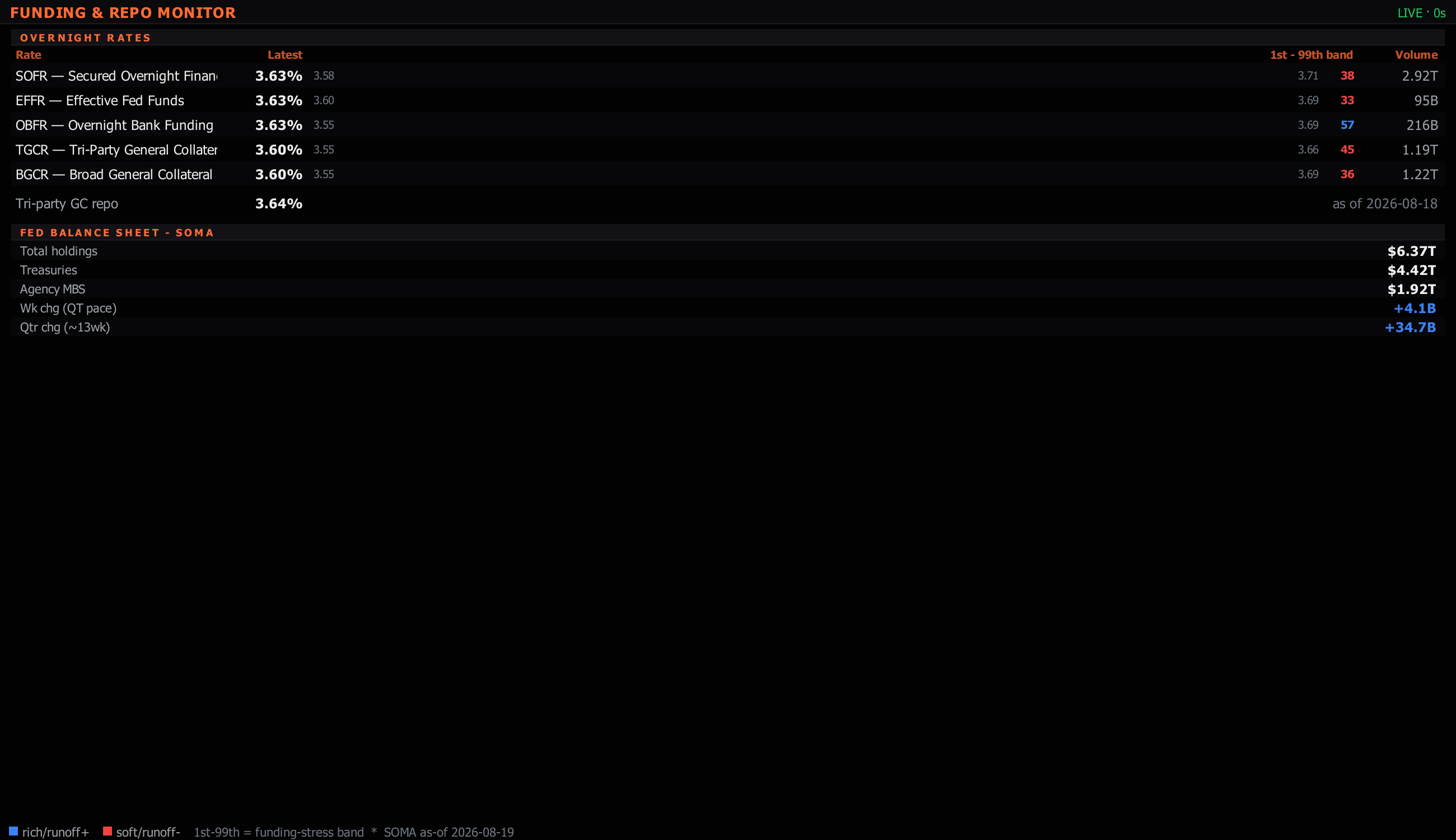
“The short rates panel tracks front end reference rates and funding spreads, where stress in short term money shows up first.”
The official short-end reference rates published daily by the NY Fed Markets Data office. SOFR, EFFR, OBFR, BGCR, TGCR — the rates desk's daily reading on funding microstructure. Plus SOFR averages (30/90/180 day) and key stress-watch spreads.
NY Fed reference rates + funding microstructure spreads.
Open itAdd Panel ▸ Macro ▸ Rates & Curve ▸ Funding & Repo Monitor (SOFR/SOMA/QT)
SOFR (Treasury repo), EFFR (effective fed funds), OBFR (overnight bank funding), BGCR (broad general collateral), TGCR (tri-party). Each is the previous-day weighted-median print, published next morning by the New York Fed.
SOFR-EFFR widening > 5bp = repo-stress event (2019 Sep-19 spike, Mar-2020). BGCR-TGCR > 3bp = collateral-segmentation issues. OBFR-EFFR > 2bp = bank funding pressure. Spreads are the early-warning system; absolute levels are the lagging confirmation.
30-day, 90-day, 180-day SOFR averages. Used as reference for variable-rate corporate debt + new-issue floaters. The 90-day average is the FRA-OIS proxy now that LIBOR is retired.
Sustained SOFR-EFFR > 5bp historically precedes Fed standing-repo-facility activation, dealer balance-sheet constraints, and broader liquidity events. Day-of: pair with the yield curve and credit spreads to triangulate stress.
Ctrl+P, then # and the panel name., sofr, repo, fedfunds.Hero chip ranks the largest absolute spread across the three watch-spreads:
Server queries markets.newyorkfed.org/api/rates/all/latest.jsonfor current rates and /api/rates/secured/sofrai/all/latest.jsonfor SOFR averages. Public API, no auth, gentle rate limits. 5-minute server cache — NY Fed publishes once daily ~8 AM ET, so faster polling is wasted.
